Hutch vs. Exercise Pen: Best Rabbit Home?
Compare wooden hutches and metal exercise pens for your rabbit, covering space, airflow, cleaning, safety, and the best setup for a happy indoor bunny.
Choosing your rabbit's home is one of the first big decisions a new owner makes, and the two options most people weigh are a traditional wooden hutch or a metal exercise pen. Both can work, but they suit very different situations. A hutch offers an enclosed, sheltered structure, while a pen offers open, flexible floor space and excellent airflow. This guide compares them honestly across the things that matter most to a rabbit's health and happiness: usable space, ventilation, cleaning, safety, and cost.
Rabbits are active, social lagomorphs who need room to hop, stretch up, dig, and binky every single day. With that in mind, let us look at how each option measures up.
Hutch and Pen Options to Compare

mayugardening 2-Story Rabbit Hutch
A larger multi-level hutch suits sheltered or supervised outdoor use when paired with a run.

GUTINNEEN GUTINNEEN Rabbit Playpen
A roomy bunny run gives open floor space, great airflow, and an easy-clean home base.
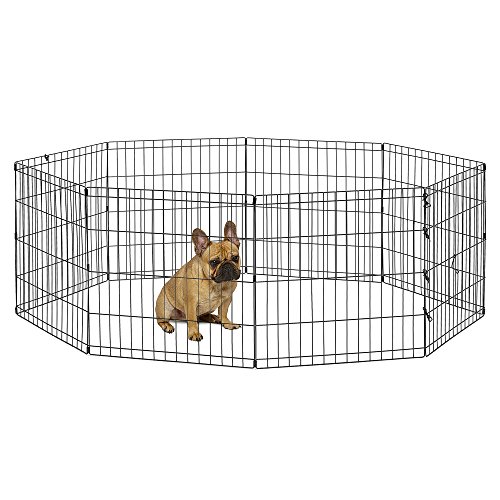
New World by MidWest New World 24-Inch Exercise Pen
Sturdy metal panels you can shape, expand, or open into a rabbit-proofed room.
Usable Space: Where Pens Pull Ahead
The biggest difference is how much room your rabbit actually gets to use. Many hutches advertise a generous footprint, but a chunk of that is taken up by a closed sleeping compartment, ramps, and thick walls, leaving a surprisingly small open area to move around. A multi-level hutch adds vertical space, which rabbits enjoy, but the ground-level run is what counts most for exercise.
An exercise pen, by contrast, is almost entirely open floor. You can shape it into a square, a long rectangle, or an L to fit your room, and you can expand it by connecting a second pen or simply leaving a panel open into a rabbit-proofed space. For a single small to medium rabbit, aim for at least 8 square feet of base space, plus daily run-around time outside the pen. Pens make hitting that target far easier.
Airflow, Cleaning, and Odor
Ventilation matters more than many owners realize. Rabbits are sensitive to ammonia buildup from urine, which can irritate their delicate respiratory systems. The open wire sides of an exercise pen allow excellent airflow, keeping the space fresh. A closed hutch, especially one with a solid sleeping box, can trap humidity and odor if it is not cleaned thoroughly and often.
Cleaning is also simpler with a pen. You can step over a panel, lift the whole pen aside, or wipe down a washable mat in minutes. Wooden hutches absorb moisture and odor over time, and the joints and corners can be fiddly to scrub. With either setup, a litter box filled with paper-based litter does most of the heavy lifting for odor control, since most fixed rabbits choose one corner as their bathroom.
Side-by-Side Comparison
| Factor | Wooden Hutch | Exercise Pen |
|---|---|---|
| Usable floor space | Often limited by walls and box | Generous and expandable |
| Airflow | Can trap humidity and odor | Excellent open-wire ventilation |
| Cleaning ease | Corners and wood absorb odor | Quick wipe-down, easy access |
| Bonding access | Reaching inside can feel cramped | Step in or open a panel easily |
| Best use | Sheltered or supervised outdoor | Flexible indoor home base |
When a Hutch Still Makes Sense
A hutch is not the wrong answer for everyone. If your situation calls for a sheltered structure, or you want an enclosed sleeping nook attached to a larger run, a good hutch can be part of a healthy setup. The keys are size and security. Choose a large, multi-level model, protect or chew-proof the interior wood, and never rely on a hutch alone as a tiny living space. Pair it with a permanent exercise run so your rabbit always has open room to move.
For any outdoor use, the standard rises sharply. The structure must be fully predator-proof on every side including the bottom, insulated against heat and cold, shaded, and checked multiple times a day. Even then, the House Rabbit Society and most exotic vets recommend indoor living as the safest, happiest standard for companion rabbits.
Our Recommendation
For the vast majority of indoor pet rabbits, an exercise pen wins. It delivers far more usable space, better airflow, easier cleaning, and simpler daily bonding than a typical hutch, and it grows with your rabbit as you connect panels or open it into a rabbit-proofed room. The combination of an exercise pen as a home base plus supervised free-roam time is hard to beat for both welfare and convenience.
A hutch earns its place in sheltered or supervised outdoor situations, but only when it is large, predator-proof, and attached to a run. If you are setting up indoors and want one clear answer, start with a roomy exercise pen, add a litter box and hideout, and give your bunny plenty of out-of-pen time. As always, a rabbit-savvy or exotic vet can help you tailor the setup to your individual rabbit's needs.
Rabbit Care Planner
Track your rabbit's health, meds, vet visits, mobility, nutrition, and quality of life, all in one printable planner.
For the individual products behind this comparison, see our GUTINNEEN 2-story hutch review, the GDLF 62 inch hutch review and the MidWest 36 inch exercise pen review.
Editor's Pick · Affiliate link
A Chew-Proof Two Storey Hutch
Rabbits chew everything, and a wooden hutch becomes a repair project and a health risk once it is soaked and gnawed. A full metal frame with two levels gives the vertical space rabbits actually use, and it survives the chewing that destroys cheaper housing.
Frequently Asked Questions
Is an exercise pen better than a hutch for a rabbit?
For most pet rabbits, yes. A metal exercise pen gives far more usable floor space, much better airflow, and easy daily access for cleaning and bonding than a typical wooden hutch. Pens are also simple to expand or reshape as your rabbit grows more confident. Hutches still have a place for sheltered or outdoor situations, but they must be large and predator-proof. As a flexible indoor home base, an exercise pen is usually the kinder, roomier choice for a companion rabbit.
How big should an exercise pen be for one rabbit?
Aim for a pen that gives at least 8 square feet of base space for a single small to medium rabbit, plus several hours of supervised run-around time outside it every day. Taller panels of 30 inches or more help stop confident jumpers and binky-happy bunnies from hopping out. Bigger is always better, and many owners simply connect two pens or leave a panel open into a rabbit-proofed room so their bunny can stretch out, dig, and zoom.
Can rabbits jump out of an exercise pen?
They can, especially energetic young rabbits or breeds that love to binky. Choose panels at least 30 inches tall, and watch whether your rabbit tries to climb or launch from a hideout placed too close to the wall. If your bunny is a determined escape artist, you can add a mesh top, raise the panel height, or move climbable furniture away from the edges. Most rabbits settle once they have enough space and enrichment inside the pen.
Are wooden hutches bad for rabbits?
A wooden hutch is not automatically bad, but the common small garden hutch is too cramped, hard to ventilate, and tricky to clean thoroughly. Wood also absorbs urine and odor over time and can harbor bacteria. If you use a hutch, choose a large multi-level model with a chew-resistant or protected interior, pair it with a permanent run, and keep it predator-proof. For indoor living, an exercise pen on washable flooring is usually easier to keep fresh and roomy.
Do I still need a litter box inside an exercise pen?
Yes. A litter box is essential whether you use a pen or a hutch. Most spayed or neutered rabbits litter-train readily, choosing one corner for their bathroom. Place a corner or large litter box filled with paper-based litter in the spot your rabbit already favors, and tuck a hay feeder right beside it, since rabbits love to munch while they go. A good litter setup keeps any enclosure clean, low-odor, and pleasant to share your home with.
Can I use a hutch and a pen together?
Absolutely, and many owners do. A hutch can act as a sheltered sleeping and hiding space while an attached exercise pen or run provides the open floor area rabbits need to move. The key is that the two are permanently connected so your rabbit can choose freely between them at all times, rather than being shut in the small hutch portion. This combination blends the security of a hideaway with the generous space a healthy rabbit needs daily.
Is a pen or hutch safer for an outdoor rabbit?
Outdoors, neither is fully safe on its own, and indoor housing remains the recommended standard. If a rabbit must live outside, a sturdy, insulated, predator-proof hutch attached to a secure covered run is generally safer than a lightweight pen, which a fox or dog can knock over or dig under. Whatever you use must be fully enclosed top and bottom, shaded, weatherproofed, and checked multiple times a day. Ask a rabbit-savvy vet about RHDV vaccination for any outdoor rabbit.
Need more help caring for your rabbit?
Browse our guides by topic to find practical solutions.
Wellness Planner: $39