Best Rabbit Hideouts: Cozy, Safe Retreats Compared
Compare 6 rabbit hideouts, from edible hay houses to wooden castles and grass tunnels. Why prey animals need a retreat and how to pick a safe, chewable one.
A hideout is one of the most important and most overlooked items in a rabbit's home. As prey animals that shelter in burrows in the wild, rabbits need a safe, enclosed retreat to feel secure, and a rabbit without one can become stressed and withdrawn. The best hideouts are made from safe, chewable materials, so they double as enrichment and healthy dental chewing. Below we compare six well-regarded rabbit hideouts to help you give your bunny a cozy place to call their own.
We compared these hideouts using materials and chew-safety, size, number of exits, and the recurring themes in verified owner reviews, against what helps a prey animal feel secure. This is research-based, not a hands-on test.
Best Rabbit Hideouts Compared

Oxbow Timothy Hay Bungalow Hideout
An edible, hand-woven timothy hay house that doubles as a safe retreat and healthy chew.

An edible hay tunnel with two open ends, ideal for nervous rabbits who want an escape route.
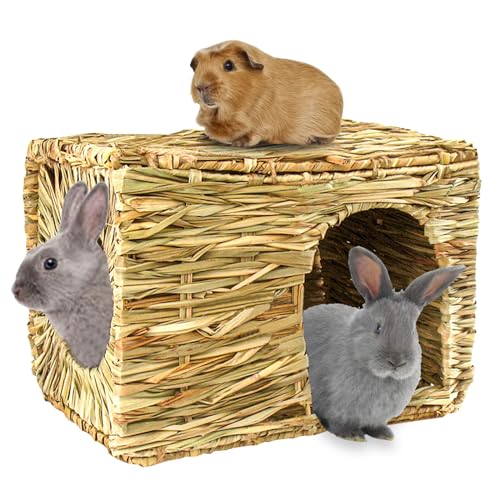
HERCOCCI Extra Large Grass House
A foldable, comfortable woven grass house with room for larger rabbits to tuck away.

HIIMALEX Large Bunny House with Balcony
A sturdy hidey house with a detachable design and a balcony perch for lookout and lounging.

BWOGUE Wooden Rabbit Castle Hideout
A detachable wooden castle hideout that gives a chewable retreat with a natural look.

PEMAR Handwoven Seagrass Tunnel
An edible seagrass tunnel hideaway that satisfies the urge to burrow, hide, and chew.
How These Hideouts Compare
| Hideout | Material | Edible | Best For |
|---|---|---|---|
| Oxbow Hay Bungalow | Timothy hay | Yes | A safe, chewable retreat |
| Oxbow Hay Tunnel | Timothy hay | Yes | Nervous rabbits wanting two exits |
| HERCOCCI Grass House | Woven grass | Yes | Larger rabbits |
| HIIMALEX Bunny House | Wood | Chewable | A house plus balcony perch |
| BWOGUE Wooden Castle | Wood | Chewable | A durable natural-look retreat |
| PEMAR Seagrass Tunnel | Seagrass | Yes | Burrowing and chewing |
How We Chose
This roundup is research-based, not a hands-on test. We compared materials and chew-safety, size, the number of exits, and the consistent patterns in verified owner reviews against what helps a prey animal feel secure. The priorities were safe, chewable construction with no toxic paint or treated wood, enough room for the rabbit to fully tuck in, and designs that let a nervous rabbit feel in control. We favored edible grass and hay options that double as enrichment, alongside sturdier wood houses for longevity.
A Closer Look at Each Pick
Oxbow Timothy Hay Bungalow
Our top pick is an edible, hand-woven house made from timothy hay, so it gives your rabbit a cozy retreat and a healthy chewing outlet in one. Chewing on the hideout helps wear down continuously growing teeth, and the natural material is completely safe to nibble. Because it is edible, it will be gradually consumed and need replacing, which is a feature rather than a flaw. A lovely, welfare-friendly choice.
Pros: Edible and safe, doubles as dental chew, cozy.
Cons: Gets eaten over time and needs replacing.
Oxbow Timothy Hay Tunnel
This edible hay tunnel offers two open ends, which can reassure a nervous rabbit who dislikes a single-exit hideout, since prey animals want an escape route. It satisfies the burrowing instinct and provides healthy chewing. At a low price it is our best-value pick and a great way to add a second retreat or pair with a house. Like all edible hideouts, it is consumed gradually.
Pros: Two exits, edible, affordable, encourages burrowing.
Cons: Open tunnel offers less full enclosure; consumable.
HERCOCCI Extra Large Grass House
For bigger rabbits who feel cramped in standard hideouts, this extra-large woven grass house offers more room to tuck away comfortably, and it folds for storage. The natural grass is safe to chew and cozy to rest in. As an edible woven product it provides enrichment alongside shelter. A solid choice when a larger breed needs a retreat sized to fit them.
Pros: Roomy for big rabbits, safe grass material, foldable.
Cons: Softer construction wears with heavy chewing.
HIIMALEX Large Bunny House with Balcony
This wooden hidey house adds a fun twist with a balcony perch on top, giving your rabbit both an enclosed retreat below and a lookout spot above, which appeals to their love of surveying their surroundings. The detachable design helps with cleaning. Wood is chewable and natural, though check that it is untreated and free of hardware a rabbit could ingest. A characterful, multi-use hideout.
Pros: Retreat plus lookout balcony, detachable for cleaning.
Cons: Heavier; confirm safe untreated construction.
BWOGUE Wooden Rabbit Castle
This detachable wooden castle hideout offers a sturdy, natural-looking retreat that stands up to use better than edible options while still giving a chewable surface. The take-apart design makes cleaning easy. As with any wood hideout, ensure it is untreated and unpainted. For owners who want a longer-lasting retreat that blends into a home, the wooden castle is an appealing pick.
Pros: Durable, natural look, detachable for cleaning.
Cons: Verify untreated wood; heavier to move.
PEMAR Handwoven Seagrass Tunnel
This handwoven seagrass tunnel doubles as a hideaway and an edible chew, satisfying the deep instincts to burrow, hide, and gnaw. The natural seagrass is safe and engaging, and the tunnel shape suits rabbits who prefer a pass-through retreat with two ends. It is enrichment and shelter combined. Being natural and chewable, it is consumed over time and will need replacing.
Pros: Edible, satisfies burrowing, natural and safe.
Cons: Wears out with chewing; less fully enclosed.
Choosing the Right Hideout
Give every rabbit at least one hideout, and consider two or more for bonded pairs or free-roam setups so no one is ever cornered. Favor safe, chewable materials, edible grass and hay, untreated wood, or plain cardboard, and avoid plastic and treated or painted surfaces. Make sure the hideout is roomy enough for your rabbit to tuck fully inside, and never pull a rabbit out of its retreat, since that undermines the security it provides. With a cozy hideout, even a shy rabbit gains the confidence to come out and enjoy life.
Rabbit Care Planner
Track your rabbit's health, meds, vet visits, mobility, nutrition, and quality of life, all in one printable planner.
Related Housing Guides
Editor's Pick · Affiliate link
A Chew-Proof Two Storey Hutch
Rabbits chew everything, and a wooden hutch becomes a repair project and a health risk once it is soaked and gnawed. A full metal frame with two levels gives the vertical space rabbits actually use, and it survives the chewing that destroys cheaper housing.
Frequently Asked Questions
Why do rabbits need a hideout?
Rabbits are prey animals, and in the wild they shelter in burrows where they feel safe from predators. A hideout recreates that security in your home, giving your rabbit a dark, enclosed retreat to relax, sleep, and escape to when startled. Without one, a rabbit can feel exposed and stressed, which affects health and behavior. A hideout is not a luxury, it is a basic welfare need that helps a rabbit feel in control of its environment and confident enough to come out and explore.
What's the best material for a rabbit hideout?
Safe, chewable, natural materials are ideal, since rabbits will gnaw their hideout. Excellent choices include edible woven grass or hay houses, untreated wood, and plain cardboard, all of which double as enrichment and dental chewing. Avoid plastic that could be chewed and swallowed, and avoid anything with paint, varnish, glue, or treated wood. Edible hideouts made from timothy hay or seagrass are especially good because chewing on them is healthy. Cardboard hideouts are cheap, safe, and easily replaced when chewed.
Should a hideout have two exits?
A hideout with two openings can help a nervous rabbit feel more secure, since prey animals dislike being cornered with only one way out. A second exit lets a rabbit flee if startled, which can make them more willing to use and relax in the hideout. That said, many rabbits happily use single-entrance hideouts too. If your rabbit seems hesitant to enter an enclosed space, offering a hideout with two exits, or one with a removable top, may help them feel safer.
How many hideouts does a rabbit need?
At least one hideout is essential, and bonded pairs or rabbits in larger spaces often benefit from two or more so each rabbit always has a retreat and no one is cornered. In a free-roam setup, placing hideouts in different areas means your rabbit always has a nearby safe spot. More hideouts also add enrichment and variety. For a single rabbit in a pen, one good hideout is the minimum, but a second tunnel or box is an inexpensive and welcome addition.
Can I use a cardboard box as a hideout?
Absolutely, a plain cardboard box with a doorway or two cut into it makes a perfect, safe, and free hideout that doubles as a chew toy. Many rabbits love cardboard hideouts as much as store-bought ones. Use plain boxes without glossy printing, heavy tape, or staples, and replace them when they get chewed up or soiled. Cardboard hideouts are a great way to provide plenty of retreats cheaply, and rotating in fresh boxes keeps your rabbit's environment interesting.
Will a hideout help a shy or scared rabbit?
Yes, a hideout is one of the most helpful things you can give a shy or newly adopted rabbit. Having a safe place to retreat lets a nervous rabbit feel in control, which paradoxically helps them gain confidence and come out to explore sooner. Never pull a rabbit out of its hideout, as that teaches them the retreat is not truly safe. Instead, let them come and go freely, and over time most shy rabbits relax and spend less time hiding.
Need more help caring for your rabbit?
Browse our guides by topic to find practical solutions.
Wellness Planner: $39