Rabbit Cage Size Guide: How Much Space Is Enough?
How big a rabbit cage should be, with square-footage and height guidelines, sizing for pairs and large breeds, and why exercise space matters most.
One of the most common mistakes new rabbit owners make is buying a cage that is far too small. Many enclosures sold as rabbit homes barely give a bunny room to turn around, let alone hop, stand tall, and stretch out. Getting the size right is fundamental to your rabbit's physical and mental health. This guide lays out clear sizing guidelines, including square footage and height, how to scale up for pairs and large breeds, and why the space outside the cage matters even more than the cage itself.
The simplest way to think about it: the enclosure is a home base, and your rabbit needs both a roomy base and several hours of daily exercise beyond it.
Sizing Up Your Rabbit's Space
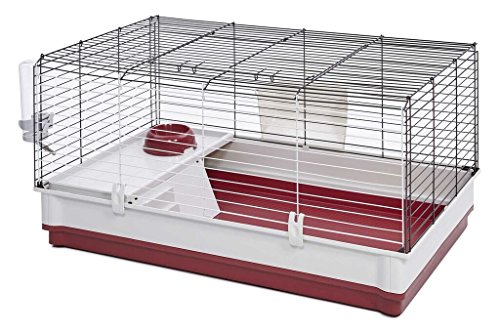
MidWest Homes for Pets 158 Wabbitat Deluxe Rabbit Home
A roomy barred base with a deep solid floor, a sensible starting point for a single rabbit.

VISCOO 20-Panel Configurable Playpen
Build the exact footprint your rabbit needs, scaling up easily for pairs or large breeds.

Far more usable space per dollar than most labeled cages, ideal for generous housing.
The Core Sizing Guidelines
Welfare organizations agree that bigger is better, and they offer a few useful rules of thumb. The most common is that an enclosure should be at least four times the size of the rabbit when fully stretched out, giving room to take several hops in a row. In square-footage terms, many guidelines suggest a minimum of roughly 8 square feet of enclosure for one rabbit, paired with at least 24 square feet of attached or accessible exercise space. These are minimums, not targets, so exceed them where you can.
Height Matters Too
Floor space gets the most attention, but height is important. Rabbits periodically stand fully upright on their hind legs to look around, a natural behavior called periscoping. A cage that is too short prevents this and feels cramped. Choose an enclosure tall enough for your rabbit to stand completely upright without the ears touching the top. Larger breeds need more headroom than dwarf rabbits, so always check height against your individual rabbit's standing reach.
Sizing for Pairs and Large Breeds
Two rabbits need more than double the space of one, both for comfortable movement and to reduce territorial friction. Welfare guidance often suggests around 10 to 12 square feet or more of enclosure for a bonded pair, plus a generous exercise area and two of key resources like litter boxes and hideouts. Large breeds such as Flemish Giants need dramatically more room than dwarfs, so always size to your rabbit's adult stretched-out length and standing height rather than their current size if they are still growing.
| Situation | Suggested Minimum Enclosure | Plus Exercise Space |
|---|---|---|
| One small to medium rabbit | ~8 sq ft | 24+ sq ft daily |
| One large breed rabbit | 10 to 12+ sq ft | Generous, the more the better |
| Bonded pair | 10 to 12+ sq ft | Large pen or free-roam ideal |
Why Exercise Space Matters Most
Even a generous enclosure is not enough on its own. Rabbits need at least three to four hours of time outside their cage every day to stay healthy, with more being better. Exercise keeps bones strong, prevents obesity, supports the constantly moving digestive system, and wards off the boredom that leads to destructive behavior and depression. Think of the cage as a bedroom, not the whole house. Many owners ultimately find that a large pen or full free-roam living, where the rabbit has run of a rabbit-proofed room or home, serves their bunny best.
Don't Trust Pet-Store Size Claims
Many cages labeled for rabbits are sized for a rabbit to sit in, not to live and move in. Measure prospective housing against the four-times-stretched-length rule and the square-footage figures above rather than the marketing on the box. When uncertain, size up, or choose an exercise pen, which typically delivers far more usable space per dollar. If your rabbit seems lethargic, overweight, or stressed in a small space, more room and more exercise often help, and a rabbit-savvy vet can rule out medical causes.
Rabbit Care Planner
Track your rabbit's health, meds, vet visits, mobility, nutrition, and quality of life, all in one printable planner.
Editor's Pick · Affiliate link
A Chew-Proof Two Storey Hutch
Rabbits chew everything, and a wooden hutch becomes a repair project and a health risk once it is soaked and gnawed. A full metal frame with two levels gives the vertical space rabbits actually use, and it survives the chewing that destroys cheaper housing.
Frequently Asked Questions
What is the minimum cage size for a rabbit?
Welfare organizations generally recommend that a rabbit's enclosure be at least four times the size of the rabbit when fully stretched out, with enough height to stand upright on the hind legs without the ears touching the top. As a practical floor-space figure, many guidelines suggest a minimum of around 8 square feet of enclosure plus at least 24 square feet of attached exercise space. Crucially, any cage is only a home base, and rabbits need several hours of additional daily exercise outside it.
How big should a cage be for two rabbits?
A bonded pair needs more than double a single rabbit's space, both to move comfortably and to avoid territorial squabbles. Welfare guidance often suggests roughly 10 to 12 square feet or more of enclosure for two rabbits, plus a generous attached exercise area, and providing two of key resources such as litter boxes and hideouts. Bigger is always better. Many owners of bonded pairs find that free-roam living or a large pen serves the rabbits best, giving them room to play together.
Does cage height matter for rabbits?
Yes. Rabbits periodically stand fully upright on their hind legs to survey their surroundings, a natural behavior called periscoping, and they need enough height to do so without their ears brushing the top. A low cage prevents this and signals cramped quarters. Aim for an enclosure tall enough for your rabbit to stretch up completely. Larger breeds need more height than dwarfs. Height also allows for enrichment like a low platform, though floor space remains the most important measurement.
Is the cage size on pet store packaging accurate?
Often not in a meaningful sense. Many cages marketed for rabbits are sized for a rabbit to merely sit in, not to live and exercise in, and they fall well short of welfare recommendations. Treat pet-store size claims with skepticism and measure against the four-times-stretched-length guideline and the square-footage figures from welfare groups instead. When in doubt, choose larger, or use an exercise pen, which usually offers far more usable space per dollar than a labeled cage.
Do bigger rabbit breeds need bigger cages?
Absolutely. A Flemish Giant needs vastly more space than a Netherland Dwarf. Always size the enclosure to your individual rabbit's fully stretched-out length and standing height, then scale up for exercise. Large breeds also benefit from sturdier, taller enclosures and more robust flooring to protect against sore hocks, since they carry more weight on their feet. When choosing housing, consider your rabbit's adult size, not their current size if they are still growing.
Can a rabbit cage be too big?
No, a rabbit cannot really have too much space, and more room nearly always improves welfare. The only practical limits are your home and budget. Some new owners worry a large space will hurt litter training, but rabbits generally litter-train well regardless of size as long as the box is in their chosen corner and kept clean. If anything, ample space reduces boredom, obesity, and stress. Pair generous housing with daily exercise and enrichment for the best results.
Is an exercise pen better than a fixed cage for space?
Usually yes. For the same money, an exercise pen typically offers a much larger and more flexible footprint than a labeled rabbit cage, and you can expand or reshape it as needed. Pens are also easier to step into for cleaning and can be left open at the top in a rabbit-proofed room. A fixed cage can work as a secure base, but most owners find a pen, or a pen attached to a cage, gives a rabbit the generous floor space welfare guidelines call for.
Need more help caring for your rabbit?
Browse our guides by topic to find practical solutions.
Wellness Planner: $39