Best Heat Relief for Rabbits 2026
Compare 5 of the best cooling mats and heat-relief products for rabbits in 2026, plus how to spot heatstroke and keep your bunny safe and cool when temperatures climb.
Heat is one of the most underestimated dangers in rabbit care. Bunnies handle cold far better than warmth, they cannot sweat, and they shed only limited heat through their ears, which means a summer day that feels pleasant to us can push a rabbit toward heatstroke. Older, overweight, long-haired, and lop-eared rabbits are especially at risk. A few simple cooling tools, paired with shade, airflow, and water, give your rabbit cool surfaces to lean against and help it ride out warm spells safely.
We compared popular pet cooling products using listed materials, design, safety for rabbits, value, and the recurring themes in verified owner reviews. We did not test these with our own rabbits. Instead we judged each one against what rabbit-savvy vets advise for heat safety: cool surfaces a rabbit can choose to use, chew-safety concerns around gel, and the reality that no single product replaces shade, ventilation, and fresh water. Below are five we recommend, a comparison table, and a clear plan for keeping your rabbit cool and spotting trouble early.
Best Heat Relief for Rabbits 2026
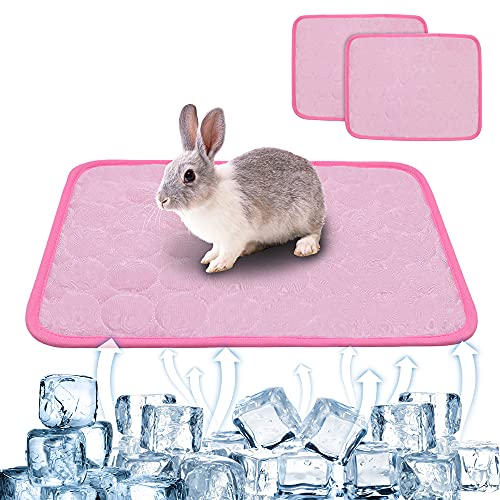
Hilihali Rabbit Cooling Mat, 2-Pack
Self-cooling pads sized for rabbits and other small pets, giving a cool surface to stretch out on.

Jetec Bunny & Guinea Pig Cooling Mat, 3-Pack
Three small cool pads to place around the enclosure so your rabbit always has a cool spot nearby.

PatiencET No-Gel Cooling Pad, 22x28
Larger no-gel cooling pad that is a safer pick for chewers, with no gel filling to worry about.

Buvlnee Ice-Silk Self-Cooling Mat
Breathable ice-silk pad that feels cool to the touch and gives a comfortable surface in warm weather.

Velvopet Breathable Cooling Mat with Non-Slip Base
Lightweight breathable cooling mat with a non-slip backing, easy to move to your rabbit's favorite spot.
How Do These Cooling Products Compare?
| Product | Price | Type | Best For |
|---|---|---|---|
| Hilihali Cooling Mat | $9 | Self-cooling pad | Best overall value |
| Jetec Cool Pads, 3-Pack | $14 | Small cool pads | Multiple cool spots |
| PatiencET No-Gel Pad | $9 | No-gel cooling pad | Chewers, safety |
| Buvlnee Ice-Silk Mat | $12 | Ice-silk pad | Breathable comfort |
| Velvopet Cooling Mat | $7 | Breathable pad | Budget, portable |
How We Picked These Cooling Products
We did not run a hands-on heat lab. Instead we compared listed materials, design, and value against the heat-safety guidance rabbit-savvy vets give, then weighed the consistent patterns in verified owner reviews. We looked for products that give a genuinely cool surface a rabbit can choose to use, since the safest approach is optional cooling the rabbit controls rather than anything forced. Chew safety was a major filter: gel-filled mats carry a blockage risk for nibblers, so we flagged no-gel and breathable options as safer for chewers. We valued mats that are easy to clean, move, and place in a favorite spot, with price as a tiebreaker. Crucially, no cooling product replaces shade, airflow, fresh water, and air conditioning in dangerous heat, or a rabbit-savvy or emergency vet if heatstroke is suspected.
A Closer Look at Each Cooling Product
Hilihali Rabbit Cooling Mat, 2-Pack
Our top overall pick is a pair of self-cooling pads sized for rabbits and small pets, giving your bunny a cool surface to flop and stretch out on so it can shed belly heat. Getting two means you can place one in the enclosure and another in a favorite lounging spot, or rotate them. They are simple, affordable, and require no power or freezing. As with any cooling mat, watch a determined chewer and inspect for damage, but for everyday warm-weather relief they are an easy choice.
Pros: Two included, rabbit-sized, no power needed.
Cons: Supervise chewers and check for punctures.
Jetec Bunny and Guinea Pig Cooling Mat, 3-Pack
With three smaller cool pads in the pack, this set lets you scatter cool spots around the enclosure and free-roam area so your rabbit is never far from somewhere to cool off. That flexibility is genuinely useful, since rabbits like to choose their own comfortable spot. The pads are made with small pets in mind and give a passive cooling surface. For multi-room setups or owners who want options in several places, the three-pack is a practical value.
Pros: Three pads for multiple spots, small-pet sized, flexible.
Cons: Each pad is small, so larger rabbits may want two together.
PatiencET No-Gel Cooling Pad, 22x28
For rabbits that chew their bedding, the no-gel construction here is a real plus, removing the blockage worry that comes with gel-filled mats. The larger size gives a generous cool surface a rabbit can sprawl across, and the absence of gel makes it a safer choice for nibblers, though you should still supervise and inspect any mat. If chew safety is your main concern, this is a sensible, roomy option at a friendly price.
Pros: No gel, large surface, safer for chewers.
Cons: Still requires supervision with dedicated gnawers.
Buvlnee Ice-Silk Self-Cooling Mat
This breathable ice-silk pad feels cool to the touch and offers a comfortable, airy surface for warm days. The ice-silk material is light and breathable, which many small pets find pleasant to lie on, and it adds a cooling option that is easy to wipe down and move around. It is a comfortable, mid-priced choice for owners who want a soft cool surface, with the usual reminder to keep an eye on any rabbit inclined to chew fabric.
Pros: Breathable ice-silk, comfortable, easy to clean.
Cons: Fabric surface needs watching with chewers.
Velvopet Breathable Cooling Mat with Non-Slip Base
The budget pick here is lightweight and breathable with a non-slip backing, so it stays put and is easy to move to wherever your rabbit likes to settle. The low price makes it an easy way to add a cool spot or two without much outlay, and the non-slip base is a nice touch on smooth floors. It covers the basics of passive cooling well, and for owners wanting an inexpensive, portable option it does the job.
Pros: Lowest price, lightweight and portable, non-slip base.
Cons: Basic construction; supervise chewers as always.
A Hot-Weather Plan for Your Rabbit
- Know the danger zone. Rabbits struggle in the high 70s and 80s; above 85 degrees heatstroke is a real risk.
- Layer your cooling. Combine cool mats or tiles, shade, fans for airflow, and air conditioning on dangerous days.
- Offer chew-safe options too. A ceramic tile or towel-wrapped frozen water bottle gives cooling with no gel risk.
- Hydrate. Provide plenty of fresh water and water-rich leafy greens, and lightly mist the ears.
- Watch for heatstroke. Fast breathing, lethargy, hot ears, and drooling are emergencies; cool gently and call a vet at once.
Cooling products are a helpful part of keeping a rabbit safe in summer, but they work only alongside shade, airflow, water, and, on the hottest days, air conditioning and an indoor space. Watch your rabbit closely in warm weather, and if you see signs of heatstroke, cool it gently and contact a rabbit-savvy or emergency vet immediately, since heatstroke can be fatal within a short time. This guide is educational and does not replace professional veterinary advice.
Rabbit Care Planner
Track your rabbit's health, meds, vet visits, mobility, nutrition, and quality of life, all in one printable planner.
For the cooling stone in detail, see our Kaytee Chinchilla Chiller review.
Editor's Pick · Affiliate link
A Chew-Proof Two Storey Hutch
Rabbits chew everything, and a wooden hutch becomes a repair project and a health risk once it is soaked and gnawed. A full metal frame with two levels gives the vertical space rabbits actually use, and it survives the chewing that destroys cheaper housing.
Frequently Asked Questions
What temperature is too hot for a rabbit?
Rabbits are far more sensitive to heat than people, and they cope much better with cold than with warmth. They are most comfortable in roughly the 60 to 70 degree Fahrenheit range, and start to struggle as temperatures climb into the high 70s and 80s. Above about 85 degrees, heatstroke becomes a real danger, especially for older, overweight, long-haired, or lop-eared rabbits. Because rabbits cannot sweat and only shed limited heat through their ears, a hot day that feels merely warm to you can be life-threatening to a bunny.
What are the signs of heatstroke in rabbits?
Warning signs include fast or labored breathing, lying stretched out and lethargic, hot ears, drooling or wetness around the mouth, a reddened or congested look, weakness, and in severe cases convulsions or collapse. Heatstroke progresses quickly and is a life-threatening emergency. If you see these signs, move your rabbit to a cool area, mist or dampen its ears with cool, not cold, water, offer water, and contact a rabbit-savvy or emergency vet immediately. Do not plunge a rabbit into cold water, since rapid temperature shock is dangerous.
How do cooling mats help rabbits?
Cooling mats give a rabbit a cool surface to stretch out on and shed body heat through its belly, which is one of the main ways rabbits dump warmth. Pressure-activated gel and no-gel self-cooling pads stay cooler than the surrounding floor, while ceramic or stone tiles naturally hold a cool temperature. They are a passive, no-power way to help your rabbit regulate on warm days. They work best as one part of a bigger heat plan that includes shade, airflow, and water, not as a sole solution in dangerous heat.
Are gel cooling mats safe if my rabbit chews one?
This is the key caution. Many cooling mats contain gel, and a rabbit that chews through the cover and swallows the contents could suffer harm or a blockage, since rabbits cannot vomit. For chewers, choose a no-gel self-cooling pad, a ceramic or stone tile, or supervise closely. Inspect any mat regularly for punctures and remove it if your rabbit starts gnawing it. A frozen water bottle wrapped in a towel or a ceramic tile is a chew-safe alternative that gives a cool surface without any gel risk.
What else can I do to keep my rabbit cool?
Layer several methods. Keep your rabbit in the coolest part of the home, out of direct sun, and use fans for airflow without blowing directly on the rabbit. Offer a ceramic tile or a towel-wrapped frozen water bottle to lean against, mist the ears lightly, provide plenty of fresh water and water-rich leafy greens, and brush out excess fur during molts. Air conditioning is the gold standard on dangerous days. Move your rabbit indoors during heat waves, since outdoor hutches can become deadly hot very fast.
Can I put ice directly in my rabbit's enclosure?
A frozen water bottle wrapped in a towel is a great safe option, giving a cool surface your rabbit can choose to lean against without getting wet or chilled. Avoid loose ice cubes a rabbit might chew into sharp pieces, and never force cold on a rabbit or aim to chill it rapidly, since temperature shock is harmful. The goal is gentle, optional cooling: provide cool surfaces and let your rabbit decide when to use them. Always pair these with shade, airflow, and water on hot days.
Need more help caring for your rabbit?
Browse our guides by topic to find practical solutions.
Wellness Planner: $39