Best Rabbit Harnesses 2026
Compare 5 of the best rabbit harnesses for 2026: padded, escape-resistant vest harnesses for safe, supervised outdoor time, plus how to introduce one gently to your bunny.
A harness can open up gentle new enrichment for the right rabbit, a little supervised time on clean grass, fresh air, and new smells to explore. But this is one product where safety details matter enormously. Rabbits are not small dogs: they spook easily, they can injure their delicate spines by twisting or bolting, and they are remarkable escape artists. A good rabbit harness is a padded vest that spreads pressure gently across the body, fits snugly so it cannot be wriggled out of, and is only ever used with close, calm supervision.
We compared popular rabbit harnesses using listed design, padding, adjustability, escape resistance, value, and the recurring themes in verified owner reviews. We did not test these on our own rabbits. Instead we judged each one against what rabbit-savvy vets and experienced owners stress: a vest or H-style shape that never puts force on the neck, soft adjustable materials, secure escape-resistant closures, and a gentle approach that lets the rabbit set the pace. Below are five we recommend, a comparison table, and a careful guide to introducing a harness.
Best Rabbit Harnesses 2026

Aiitle Breathable Padded Rabbit Harness & Leash
Soft padded vest harness with breathable fabric and a secure closure, made specifically for rabbits.

Niteangel Adjustable Soft Harness with Elastic Leash
Adjustable soft rabbit harness with a gentle elastic leash that gives a little stretch and reduces jolts.

SQUSIMEI Double-Buckle Reflective Harness Set
Vest harness with double buckles and reflective strips for extra security and visibility outdoors.

WeimoMonkey Escape-Proof Mesh Harness & Leash
Mesh vest harness designed to resist escapes, with broad body coverage for wriggly bunnies.
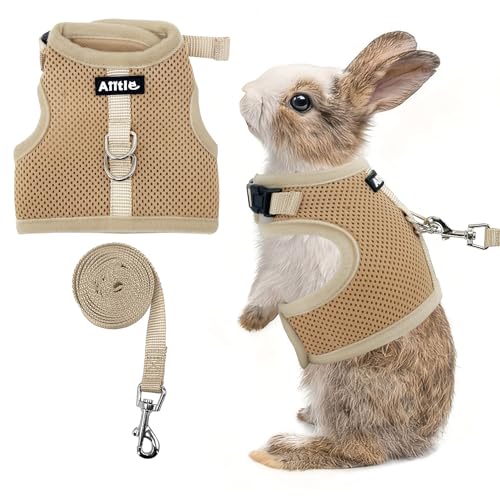
Aiitle Adjustable Rabbit Harness & Leash Set
Lightweight padded harness with magic-tape and buckle closures, easy to adjust for a snug fit.
How Do These Rabbit Harnesses Compare?
| Harness | Price | Style | Best For |
|---|---|---|---|
| Aiitle Breathable Vest | $10 | Padded vest | Best overall comfort |
| Niteangel Soft Harness | $10 | Soft adjustable vest | Gentle elastic leash |
| SQUSIMEI Double-Buckle | $13 | Reflective vest | Extra security |
| WeimoMonkey Mesh | $12 | Escape-proof mesh | Wriggly escape artists |
| Aiitle Adjustable Set | $10 | Padded vest | Easy snug fitting |
How We Picked These Harnesses
We did not run a hands-on walking lab. Instead we compared listed design, padding, adjustability, and escape resistance against the safety guidance rabbit-savvy vets give, then weighed the consistent patterns in verified owner reviews. Body-safe design came first: we only considered vest and H-style harnesses that spread pressure across the chest and body, never neck collars, which can injure a rabbit that bolts. Escape resistance mattered just as much, since a loose harness is worse than none, so we favored snug, well-closing, broad-coverage designs. Soft, breathable, adjustable materials and a gentle leash rounded out the comfort picture, with value as a tiebreaker. No harness replaces close supervision, and a harness is always optional, never something to force on a rabbit that dislikes it.
A Closer Look at Each Harness
Aiitle Breathable Padded Rabbit Harness and Leash
Our top overall pick is a soft, breathable padded vest made specifically for rabbits, which means the proportions and closures suit them rather than a generic small pet. The padding spreads pressure gently across the body, and the breathable fabric helps on warm days when rabbits can overheat. Combined with a secure closure and a matching leash, it offers a comfortable, body-safe option for calm supervised outings. For most rabbits ready to try a harness, it is an easy first recommendation.
Pros: Rabbit-specific, padded and breathable, secure closure.
Cons: As with any harness, fit must be checked carefully to prevent escapes.
Niteangel Adjustable Soft Harness with Elastic Leash
This soft adjustable harness pairs with a gentle elastic leash that stretches slightly, which softens any sudden movement and reduces jolts to a rabbit's delicate frame. The adjustability helps dial in a snug fit, and the soft construction is comfortable for sensitive bunnies. The elastic leash is a thoughtful touch for an animal that should never be pulled, letting you keep gentle contact without a hard yank. It is a kind, well-considered choice for careful owners.
Pros: Adjustable, soft, gentle elastic leash.
Cons: Elastic leash means less direct control, so stay very close.
SQUSIMEI Double-Buckle Reflective Harness Set
For owners who want extra reassurance, this vest harness adds double buckles for a more secure closure and reflective strips for visibility in low light. The double-buckle design helps guard against the escapes rabbits are famous for, and the broad vest shape keeps pressure off the neck. It is a sensible step up in security for a determined wriggler, though as always, no buckle replaces a careful fit check and constant supervision.
Pros: Double buckles for security, reflective, body-safe vest.
Cons: Slightly more to fasten when fitting.
WeimoMonkey Escape-Proof Mesh Harness and Leash
Escape resistance is the headline here, with a mesh vest designed for broad body coverage that is harder for a rabbit to back out of. That makes it worth a look for the bunnies that treat every harness as a puzzle to escape. The mesh is breathable, and the wide coverage distributes pressure well. No harness is truly escape-proof on a panicked rabbit, so the usual rules apply, but for wriggly escape artists this design stacks the odds in your favor.
Pros: Escape-resistant design, breathable mesh, broad coverage.
Cons: No harness is foolproof; supervision remains essential.
Aiitle Adjustable Rabbit Harness and Leash Set
A lightweight padded harness from the same rabbit-focused brand as our top pick, this set uses magic-tape and buckle closures that make it easy to adjust for a snug, secure fit. The padding keeps it comfortable, and the simple fastening helps you get the fit right, which is the single most important factor in preventing escapes. It is a fine alternative or backup, especially if you like the idea of quick, adjustable fitting on a fidgety rabbit.
Pros: Easy to adjust, padded, rabbit-specific design.
Cons: Magic-tape closures need checking for a firm hold.
Introducing a Harness Safely
- Go slowly. Let your rabbit sniff and wear the harness for seconds at first, building up over days with treats.
- Fit it snugly. Use a vest style across the body, never a neck collar, and check it cannot be wriggled off.
- Practice indoors. Only try outside once your rabbit moves comfortably while wearing it.
- Stay enclosed and close. Use a quiet, predator-safe space, watch for overheating, and never tie your rabbit up.
- Respect a no. If your rabbit freezes, flattens, or struggles, stop and enrich another way.
A harness can be a lovely bit of supervised enrichment for a confident rabbit, but only with the right body-safe gear, a patient introduction, and constant supervision in a secure space. Never pull or tie your rabbit, watch closely for stress and heat, and if your rabbit ever seems injured after a struggle or panic, contact a rabbit-savvy or exotic vet. This guide is educational and does not replace professional veterinary advice.
Rabbit Care Planner
Track your rabbit's health, meds, vet visits, mobility, nutrition, and quality of life, all in one printable planner.
Related Rabbit Guides
Editor's Pick · Affiliate link
A Chew-Proof Two Storey Hutch
Rabbits chew everything, and a wooden hutch becomes a repair project and a health risk once it is soaked and gnawed. A full metal frame with two levels gives the vertical space rabbits actually use, and it survives the chewing that destroys cheaper housing.
Frequently Asked Questions
Is it safe to walk a rabbit on a harness?
It can be, with the right gear and a gentle approach, but rabbits are not dogs and should never be pulled or led. A harness lets a calm rabbit explore safely in a secure outdoor space while you stay close, but rabbits spook easily and a panicked rabbit can hurt its delicate spine by twisting or bolting. Use a well-fitted vest-style harness, never a neck collar, let your rabbit set the pace, and stay in a quiet, enclosed area. Many rabbits never enjoy it, and that is perfectly fine.
What kind of harness is safest for a rabbit?
A padded vest or H-style harness that spreads pressure across the chest and body is far safer than anything that puts force on the neck or a thin strap. Never use a collar, since a rabbit that bolts could injure its throat or neck. Look for soft, adjustable, escape-resistant designs with secure closures, since rabbits are clever escape artists and can back out of a loose harness in seconds. The harness should be snug enough that you cannot pull it off over the head, but not tight.
How do I get my rabbit used to a harness?
Go slowly over days or weeks. Let your rabbit sniff the harness, then drape it on for a few seconds with a treat, building up to fastening it briefly indoors before any outdoor attempt. Watch for freezing, flattening, or struggling, which mean your rabbit is stressed, and stop if so. Practice short, calm indoor sessions first so the harness feels normal. Only once your rabbit moves comfortably while wearing it should you consider a quiet, enclosed outdoor space, always supervised and never tied up.
Can my rabbit escape from a harness?
Yes, and this is the biggest safety concern. Rabbits are flexible and determined, and a loose or poorly designed harness can be wriggled out of alarmingly fast, especially if the rabbit panics. That is why fit and an escape-resistant design matter so much: the harness must be snug across the chest and body without restricting breathing, and you should test it indoors before trusting it outside. Always stay within arm's reach, since even a secure harness is no substitute for close supervision in an open area.
Where should I take a rabbit on a harness?
Stick to quiet, enclosed, predator-safe spaces like a fenced garden or a calm patch of clean grass, never busy or open areas. Avoid places treated with pesticides or fertilizers, check for toxic plants, and steer clear of dogs, loud noise, and birds of prey overhead. Keep sessions short, provide shade, and watch the temperature, since rabbits overheat easily. The point is gentle, supervised enrichment at your rabbit's pace, not a walk in the conventional sense. Let your rabbit explore and head in if it seems anxious.
What if my rabbit hates the harness?
Plenty of rabbits simply do not enjoy wearing a harness, and forcing it only causes stress that can be dangerous given how easily rabbits injure their backs. If your rabbit freezes, flattens, struggles, or seems frightened despite slow, patient introduction, it is kindest to stop and offer enrichment another way, such as a secure outdoor pen, free-roam time, foraging toys, or a bonded companion. A harness is one optional tool among many, and there is no need to push a rabbit that clearly dislikes it.
Need more help caring for your rabbit?
Browse our guides by topic to find practical solutions.
Wellness Planner: $39